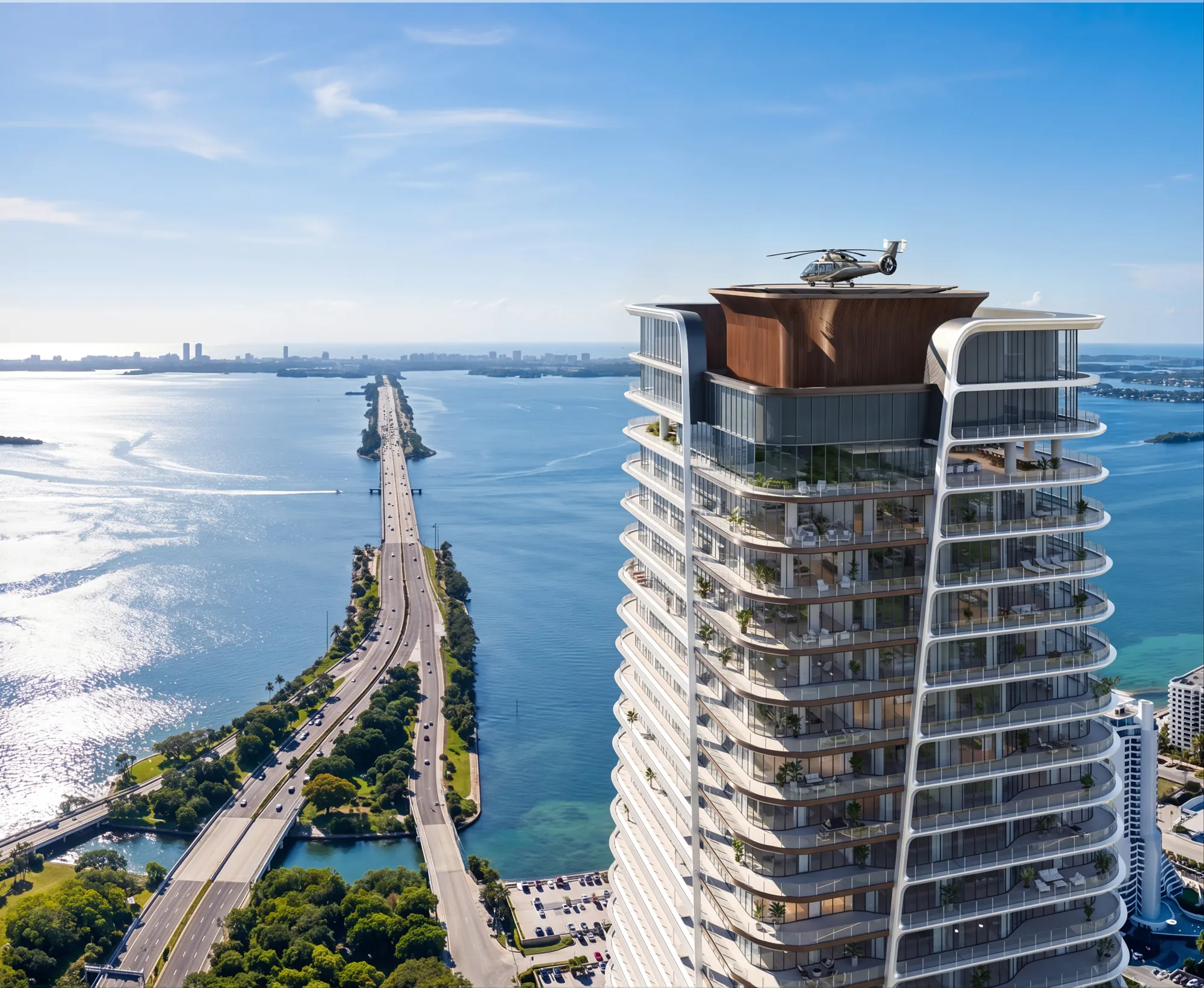
What does the estimated Anantara Miami timeline actually tell buyers?
The timeline for Anantara Residences Miami provides three distinct planning anchors: estimated groundbreaking in Q3 2027, estimated top-off in Q4 2028, and estimated completion and closing in Q4 2030. Each describes a different point in the development process. Reading them as separate milestones helps buyers avoid treating the start of construction, completion of the building’s structural height and readiness for closing as interchangeable events. None should be read as a guaranteed date.
The project is planned at 3601 Biscayne Boulevard, Miami FL 33137, in Edgewater, within a Biscayne Bay setting. Its program includes 50 stories, 200 residences and more than 130,000 square feet of amenities with a wellness focus. Those project characteristics provide context, but they do not establish construction progress. A useful first question is: which decisions must I make now, and which require documentation tied to a later milestone?
How should contract-related deposits fit into your planning?
Not every payment in the deposit schedule depends on physical construction. The first deposit is linked to contract, and the next is due 90 days after contract. That distinction matters because a buyer’s own contract date establishes an early planning sequence separate from the estimated groundbreaking and top-off dates. Before proceeding, identify the applicable contract date, record the subsequent payment deadline and review how the documents describe each obligation with your own advisors.
Use the deposit table as a concise overview rather than a substitute for the purchase documents. Ask which materials specify payment instructions, how receipt of funds will be confirmed and whom to contact through your buyer-facing team if an instruction needs clarification. This is a practical organization exercise, not a prediction about construction. Keep the signed documents, payment records and milestone communications together so you can distinguish your completed payments from future amounts still to be organized.
What are the starting prices by floor plan?
| Collection | Bedrooms | Bathrooms | Interior | Starting Price |
|---|---|---|---|---|
| Resort Residences | 1 | 1 | 913–1,053 SF | Starting from $1,800,000 |
| Resort Residences · Corner | 2 | 2.5 | 1,580 SF | Starting from $2,900,000 |
| Private Residences | 1 | 1 | 913–1,053 SF | Starting from $1,600,000 |
| Private Residences | 2 | 2.5 | 1,580 SF | Starting from $2,700,000 |
| Private Residences | 3 | 3.5 | 2,391 SF | Starting from $4,800,000 |
| Private Residences | 4 | 4.5 | 2,955 SF | Starting from $6,000,000 |
| Private Residences | 5 | 5.5 | 5,346 SF | Starting from $13,000,000 |
| Private Residences | 6 | Price upon request | Price upon request | Price upon request |
Prices and availability subject to change
When are the five purchase payments due?
| Milestone | Payment |
|---|---|
| At contract | 10% |
| 90 days after contract | 10% |
| Groundbreaking — estimated Q3 2027 | 10% |
| Top-off — estimated Q4 2028 | 10% |
| Closing — estimated Q4 2030 | 60% |
What should buyers understand about estimated Q3 2027 groundbreaking?
Groundbreaking generally marks the beginning of a project’s construction phase; it does not mean a residence is close to occupancy or closing. For Anantara Residences Miami, that milestone is estimated for Q3 2027 and is associated with a scheduled deposit. The important buyer distinction is between the broad meaning of groundbreaking and the specific way the purchase documents identify the event for payment purposes. Ask how that milestone will be communicated and documented.
This timeline does not establish that site work has begun, that permits have been issued or that any particular construction activity is underway. Instead of filling those gaps with assumptions, request the materials available for your review and separate dated documentation from general marketing descriptions. Your checklist can remain straightforward: what event is being described, what evidence accompanies the notice, what payment action is requested and which questions should your own advisors review before you respond?
Why is estimated Q4 2028 top-off different from completion?
Top-off generally refers to reaching the building’s highest structural point. It is an important construction milestone, but it is not the same as completing interiors, delivering amenities or preparing an individual residence for closing. Anantara Residences Miami identifies estimated top-off in Q4 2028, with estimated completion and closing later, in Q4 2030. Buyers should preserve that distinction when considering personal schedules rather than using the structural milestone as a proxy for a move-in date.
The deposit schedule also connects a payment to top-off, making the milestone relevant to both construction understanding and financial organization. Ask how the applicable documents define the trigger and what communication you should expect before arranging the payment. Separately, keep a list of questions about the remaining steps toward completion. A structural milestone can help organize your review, but it should not be treated as confirmation that a particular residence, shared space or closing process is ready.
How should you prepare for estimated Q4 2030 completion and closing?
Estimated completion and closing are both identified for Q4 2030, but they describe related rather than identical concepts. Completion concerns delivery of the project; closing concerns the steps required to complete your purchase. Their placement in the same estimated quarter should not be interpreted as a guaranteed appointment, a promised occupancy date or confirmation that every buyer will follow an identical sequence. Ask for the residence-specific information that will guide your preparation as that milestone approaches.
The schedule assigns the remaining 60% to closing, so organizing the final payment deserves its own checklist. Ask what documents you will receive, how final payment instructions will be verified and what opportunities there will be to review the residence and raise questions. Discuss the applicable requirements with your own advisors. Avoid making inflexible personal arrangements solely around the estimated quarter, and distinguish an early planning conversation from instructions issued for your actual purchase.
Does choosing Resort or Private residences change your planning questions?
The stated project timeline is a common planning reference, but the two residence collections raise different use questions. Resort residences occupy floors 11–22 and comprise 100 fully furnished residences with 10-foot ceilings and optional hotel rental management. Private residences occupy floors 23–47 and comprise 100 residences with 11-foot ceilings, private elevators and a six-month minimum rental. Compare these characteristics with your intended use rather than assuming the collections offer identical ownership experiences or rental arrangements.
Before choosing, ask what residence-specific materials explain furnishings, access and the applicable rental framework. Optional hotel rental management is a feature to evaluate, not a promise of occupancy or income. The Anantara brand does not guarantee rental income or returns. For Private residences, consider whether the six-month minimum rental fits the periods you might contemplate. These questions belong early in the decision process, because a preferred floor or layout alone does not resolve how you intend to use the home.
Which budget details deserve attention beyond the milestone dates?
Read the starting-price table alongside the deposit schedule, but keep their functions separate. A starting acquisition price helps frame the residence options; the deposit schedule organizes payments across the purchase process. Starting prices and availability are subject to change. Confirm the price and availability of the specific residence you are considering before translating a percentage into a payment amount. A general starting figure should not be mistaken for a confirmed quotation for every home in its category.
Maintenance is stated at $2.20 per square foot. The available figure does not establish its billing interval or inclusions, so neither should be inferred when preparing a budget. Request clarification about how the figure applies to your selected residence and what documentation explains it. Then organize confirmed acquisition figures, scheduled deposits and unresolved cost questions separately. This approach makes conversations more productive without inventing expense assumptions or allowing the estimated completion date to stand in for a complete ownership budget.
How can a remote buyer evaluate the timeline responsibly?
Begin by requesting project materials through Kyle Gilligan, brokered by Douglas Elliman, then review them with your own advisors and arrange a call focused on unresolved questions. Ask which signing and funding steps require your presence, and do not assume that closing can be completed entirely remotely. A useful call agenda separates residence selection, payment timing and later closing logistics, allowing each topic to receive attention without treating a preliminary conversation as final instructions.
The project brings together One Thousand Group with Minor Hotels, architecture by Kohn Pedersen Fox, known as KPF, and interiors by Patricia Urquiola. It is North America’s first Anantara branded residences. These details help identify the offering, but do not guarantee its timetable or financial performance. Finish your review with a written list: which residence interests you, which dates remain estimates, which documents need clarification and which next step you are prepared to take after your advisors’ review.
Frequently asked questions about the completion timeline
Is Q4 2030 a guaranteed completion or closing date?
No. Q4 2030 is the estimated completion and closing period for Anantara Residences Miami. It should guide preliminary planning, not be treated as a guaranteed appointment or occupancy date. Review the purchase documents with your own advisors and ask how residence-specific closing information will be communicated. Keep personal arrangements distinct from the project’s estimated schedule until you have the applicable instructions.
Does top-off mean my residence will be ready to use?
No. Top-off generally means the building has reached its highest structural point, not that an individual residence or the amenities are ready for use. The project’s estimated Q4 2028 top-off and estimated Q4 2030 completion and closing are separate milestones. Ask what documentation explains each event and avoid using the earlier structural milestone as the basis for a move-in plan.
Why does my contract date matter before groundbreaking?
The deposit schedule includes a payment at contract and another 90 days after contract, so your early payment planning is not based solely on construction milestones. Identify the applicable dates in your documents and organize payment instructions and confirmation records. The estimated groundbreaking date provides a different reference point; it should not replace the deadlines associated with your own purchase agreement.
Can I assume rental income will cover ownership expenses?
No. Resort residences offer optional hotel rental management, but that feature is not a promise of occupancy, income or returns. The Anantara brand does not guarantee rental income or returns. Private residences have a six-month minimum rental. Evaluate the applicable residence documents and your intended use without building your purchase decision around assumed rental performance or an unverified expense-offset calculation.
What should an overseas buyer request first?
Request project materials, the relevant residence information and the deposit schedule, then review them with your own advisors before arranging a focused call. Ask which signing and funding steps require physical presence and what instructions will apply as closing approaches. Do not assume a fully remote closing is available. Kyle Gilligan, brokered by Douglas Elliman, is the buyer-facing agent for inquiries.